


In today’s pursuit of green energy, water electrolysis hydrogen production has gained widespread attention due to its clean and efficient characteristics. However, during operation, if the hydrogen concentration becomes too high, it may create serious safety risks. Ensuring accurate monitoring and control of hydrogen levels is therefore critical for safe production.
Risks of Excessive Hydrogen Concentration
Under ideal conditions, hydrogen produced via electrolysis is highly pure. Yet, equipment failure or improper operation can cause hydrogen to accumulate in certain areas, leading to dangerously high concentrations. This may result in:
1. Explosion Hazards
Hydrogen is highly flammable, with an explosive range of 4%–75% in air. Once the concentration exceeds the lower explosive limit, even a small spark or heat source could trigger a violent explosion — causing catastrophic damage to both equipment and personnel.
2. Equipment Damage
Excess hydrogen concentration can increase internal pressure, accelerate material aging, and even cause hydrogen embrittlement. This shortens equipment lifespan and drives up maintenance costs.
3. Reduced Production Efficiency
Abnormal hydrogen levels usually indicate suboptimal electrolysis conditions. This not only poses safety risks but also reduces hydrogen production efficiency, resulting in wasted energy and higher operating costs.
The Solution: Hydrogen Analyzers
To mitigate these risks and ensure safe, efficient operations, hydrogen analyzers are indispensable. These devices provide real-time monitoring of hydrogen concentration, issue timely alerts, and deliver critical data for operators.
At INNOKIE Technologies GmbH, we have developed advanced portable and online hydrogen analyzers tailored for industries such as ammonia, chemical processing, and broader hydrogen applications.
Product Highlights: WSM700 & WSM750
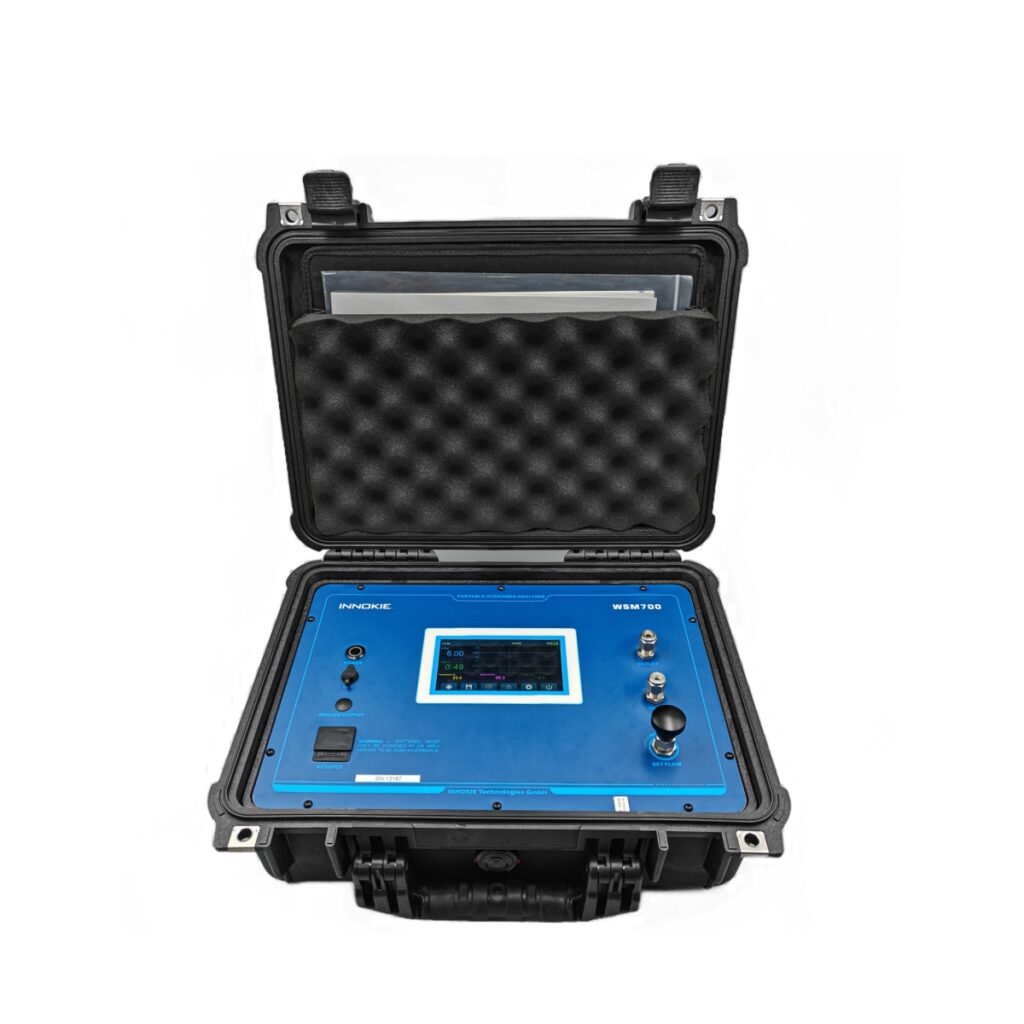
The WSM700 portable and WSM750 online hydrogen analyzers are designed based on the thermal conductivity detection (TCD) principle. Since different gases have distinct thermal conductivities depending on their composition, the analyzers can accurately and rapidly measure hydrogen concentration in various gas mixtures.
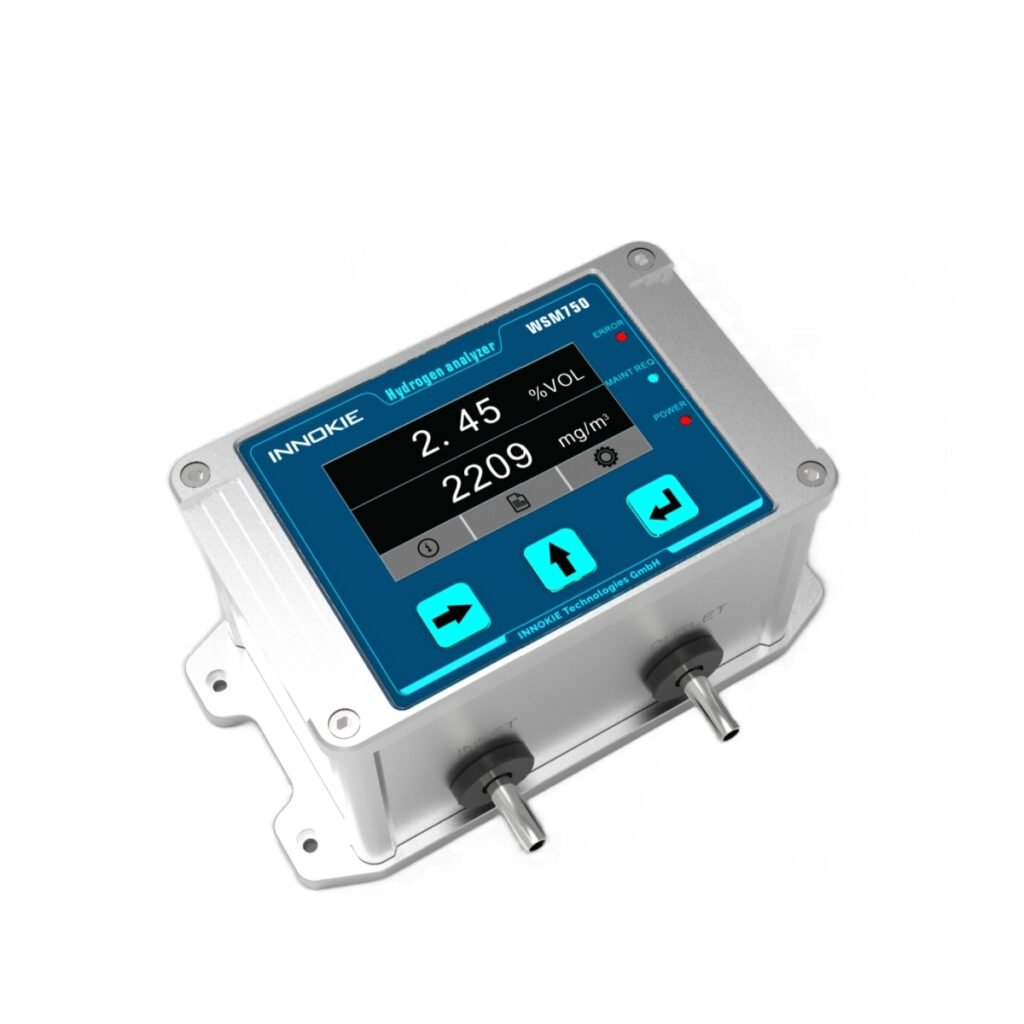
- Accurate & Fast: Reliable hydrogen concentration measurements in real time
- Energy Optimization: Provides data to improve hydrogen utilization efficiency
- Safety & Environmental Monitoring: Supports plant safety and compliance
- Broad Applications: Widely used in multiple industries, including chemical, energy, and environmental protection
How It Works
TCD technology, first applied in chemical process industries in the 1920s, measures thermal conductivity differences between gases. Each gas has a unique conductivity depending on viscosity, molecular weight, and temperature. In gas mixtures, the overall thermal conductivity varies with concentration, allowing precise determination of hydrogen levels.
Conclusion
While water electrolysis for hydrogen production holds immense potential, safety must always come first. By deploying high-performance hydrogen analyzers, enterprises can not only prevent safety hazards caused by excessive hydrogen concentration but also enhance production efficiency and reduce operational costs.
At INNOKIE, we believe that investing in reliable gas detection solutions is investing in the sustainable future of your business.
